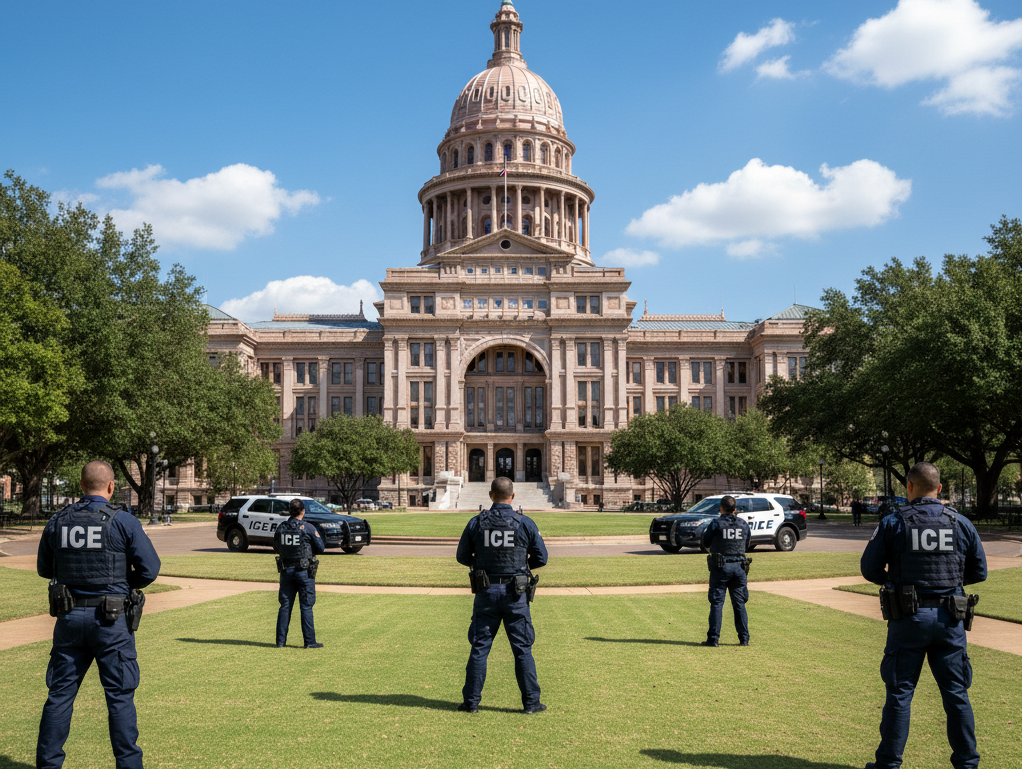
As Austin police finalize their policy on federal immigration administrative warrants, the department is navigating a legal and political minefield — balancing Texas law, which limits how far cities can go in restricting immigration enforcement, with calls from residents to scale back cooperation with federal agents.
That tension was apparent during a town hall earlier this month, when some residents urged Police Chief Lisa Davis to disobey state law and prohibit city police from communicating with U.S. Immigration and Customs Enforcement in all circumstances. City leaders have dismissed this idea, though they said they are examining what guardrails they could implement to limit when Austin police call ICE. The debate comes after the American-Statesman reported that Austin police had contacted federal immigration agents over administrative warrants — those issued by ICE for alleged immigration violations.
But a Statesman analysis found Austin is far from alone. Across Central Texas — and in major cities statewide — law enforcement agencies largely rely on officer discretion when confronted with ICE administrative warrants, citing legal uncertainty and concern that stricter limits could conflict with state law. With few explicit policies and limited tracking of outcomes, the result is a patchwork system that offers little transparency into how often local police assist federal immigration enforcement — or what happens after they do — leaving chiefs and sheriffs navigating competing pressures from the state, the federal government and their communities.
“This is what keeps chiefs up at night, the struggle to deal with, on one hand, the federal government and, on the other hand, maintaining public trust,” said Chuck Wexler, executive director of the Police Executive Research Forum, a national association of police leaders. “It’s really challenging to be an American police chief or sheriff. They’re supposed to be solving the immigration crisis.”
Last Updated: 02/12/2026